

Deadlift Common Mistakes & Back Pain Fixes
Why Deadlifts Irritate the Low Back When Technique and Fatigue Drift
If deadlifts bother your lower back, the problem is rarely the deadlift itself. It’s usually that the rep turns from a hip hinge into a spine-dominant grind, because the bar drifts forward, the brace collapses, or your spinal position changes as fatigue builds.
Deadlifts are a hinge plus a brace: your hips and knees move the load, while your torso stays rigid enough to transmit force efficiently. When you lose that “rigid torso + close load” relationship, the lift becomes mechanically harder and commonly feels worse on the low back. This guide walks through the mistakes that most often trigger that shift, and the fastest fixes that bring deadlifts back to being productive. Low Back Biomechanics during Repetitive Deadlifts (open-access narrative review)
What You’ll Learn in This Article
- The most common deadlift mistakes that shift stress into the low back
- How to keep the load close so the hinge stays efficient
- Bracing cues that actually hold up under heavy sets
- Why rounding and “changing shape” are not the same thing
- How to lock out without leaning back or jamming the spine
- How machines help you standardize your hinge and reduce setup-related errors
- A quick checklist to troubleshoot your next set immediately
Mistake 1: Starting With the Load Too Far Forward
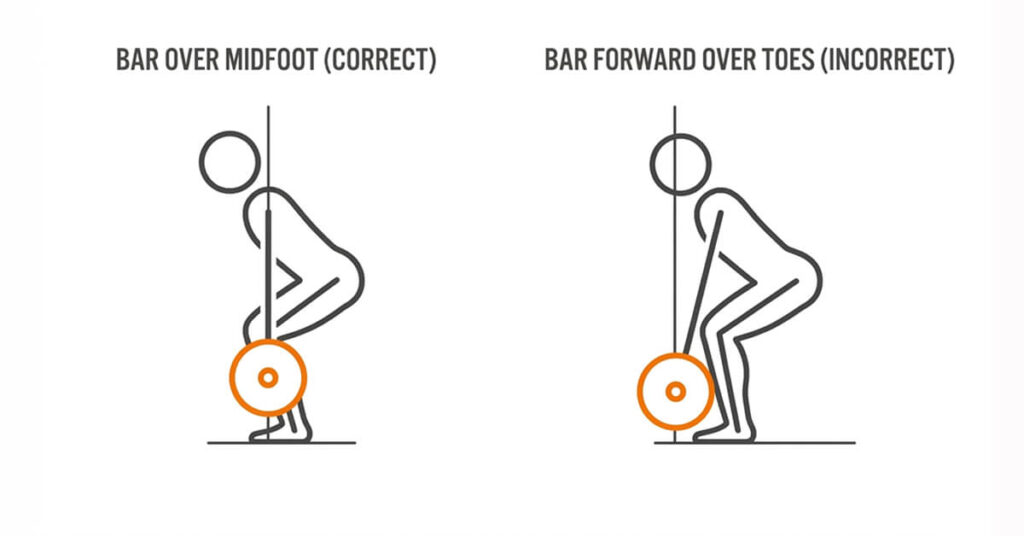
When the bar (or handles) start forward of your midfoot, the deadlift becomes harder instantly, and the low back often tries to “save” the rep.
The farther the load drifts from your body, the bigger the moment arm becomes. That typically increases the demand on the trunk and makes it harder to keep position.
What it looks like
- Bar starts over toes instead of midfoot
- Bar drifts away from shins during the pull
- You feel your low back doing the “work” early
Fast fix cues
- “Bar over midfoot.”
- “Shins close, lats tight, drag the bar up the legs.”
- Think “armpits tight” to keep the load from drifting forward.
Mistake 2: Pulling With a Soft Brace
A deadlift isn’t just legs and hips. If the torso isn’t braced, the spine becomes the path of least resistance.
Bracing isn’t about being stiff for show, it’s about keeping your torso from changing shape so hip and knee extension can do their job.
What it looks like
- You inhale after you start pulling
- You lose position at the bottom or mid-shin
- The rep feels shaky, not powerful
Fast fix cues
- Brace before the pull: inhale, then create “360° pressure” around your trunk.
- “Ribs down enough to stay stacked.”
- Reset between reps (especially heavy sets). Don’t rush.
Mistake 3: Jerking the Bar Off the Floor
Most “deadlift back tweaks” happen when people go from zero tension to max effort instantly.
A clean pull starts by building tension, then driving smoothly. Jerking encourages position loss and turns the first inch into chaos.
What it looks like
- Audible “clank” + sudden yank
- Hips pop up, chest drops, bar drifts forward
- First rep always feels worst
Fast fix cues
- “Take the slack out.” Create tension first.
- “Push the floor away” instead of yanking the bar.
- Use a controlled start every rep, even on touch-and-go sets.
Mistake 4: Hips Shooting Up (Turning It Into a Back-Limited Pull)
If your hips rise faster than your shoulders, the deadlift often turns into a stiff-leg pattern mid-rep, forcing your back to finish it.
Some hip rise is normal, but when it’s exaggerated, the lift usually becomes harder and feels less glute/leg-driven.
What it looks like
- Your hips jump up immediately
- Your torso becomes more horizontal instantly
- The pull becomes “all back” from mid-shin to lockout
Fast fix cues
- Set your wedge: feel tension before you pull.
- “Leg press the floor away” at the start.
- Reduce load until your first rep and last rep have the same shape.
Mistake 5: Losing Spinal Position Under Fatigue (The Real Issue)
The biggest problem isn’t that your back looks a certain way, it’s that it changes under load.
Some lifters naturally start with a bit more rounding or a bit more extension than others. The common back-pain pattern is when your spine moves more into flexion or extension as the set gets hard, because the body is searching for leverage.
What it looks like
- You start in one position, then round more as the bar breaks the floor
- Your lower back “unfolds” abruptly on the way up
- You can’t repeat the same rep shape from set to set
Fast fix options (choose one, don’t change everything at once)
- Lower the load and keep reps identical.
- Use paused reps 1–2 cm off the floor (or just below the knee on hinges) to reinforce position.
- Reduce range temporarily (blocks / higher handles / machine start height) until your hinge is stable.
- If you can’t keep shape on floor pulls, switch the main work to a machine deadlift or RDL-style hinge where you can control the start position.
Mistake 6: Overextending the Lockout
Deadlift lockout is “stand tall,” not “lean back.”
Many lifters finish by cranking the ribs up and leaning back. That can shift stress into the low back and turns a strong hinge into a spine-dominant finish.
What it looks like
- Rib flare and aggressive lean-back
- Hips through, then more “backbend” after the lift is already done
Fast fix cues
- “Stand tall.”
- “Glutes finish, ribs stay stacked.”
- Stop the rep when the hips and knees are extended, no extra motion.
Mistake 7: Doing Too Much, Too Close to Failure, Too Often
Even good technique breaks down when fatigue gets too high, especially in heavy hinge patterns.
Deadlifts are a high-fatigue lift. When your program repeatedly pushes high reps or failure-style sets, form drift becomes more likely. The fix is not fear, it’s smarter dose control: stop sets when the rep changes shape, manage weekly volume, and use variations that keep quality high.
Fast fix rules that protect the back and keep progress moving
- End sets at technical failure (when the rep changes shape), not at “absolute survival.”
- Keep 1–3 reps in reserve on most work sets; save true grinders for specific phases.
- Use longer rest for heavy work so your brace and bar path don’t collapse under breathlessness.
How Machines Help Reduce Common Mistakes Without Being “Easier”
Machines don’t remove effort. They remove unnecessary variability.
A good deadlift machine can help you keep deadlifts productive because it standardizes the parts of the lift that often cause issues:
- A stable platform for repeatable foot pressure
- A consistent start position (often adjustable via handle height or start depth)
- Less opportunity for the load to drift away if the setup guides the path
- Faster setup, which matters for high-quality volume
What machines don’t do for you
- They don’t brace your trunk for you
- They don’t automatically fix poor hip hinge mechanics
- You still need stacked ribs/pelvis, controlled range, and clean reps
Booty Builder positioning
Booty Builder-style deadlift machines are built to make hinge training more repeatable (stable platform, adjustable setup). That repeatability helps you focus on the rep itself, especially useful when you’re rebuilding clean mechanics or accumulating posterior-chain volume without “setup fatigue.”
60-Second Deadlift Pain Troubleshooting Checklist
If your low back lights up, don’t guess. Run this checklist before the next set.
- Is the load starting and staying close to you? If not → tighten lats and fix start position.
- Are you bracing before you pull? If not → reset, breathe, brace, then pull.
- Are your hips shooting up? If yes → reduce load and cue “push the floor away.”
- Is your spine changing shape during the set? If yes → stop earlier, reduce load, or change start height/variation.
- Is lockout becoming a lean-back? If yes → “stand tall,” ribs stacked.
When to Stop and Get Checked
Training discomfort and sharp pain are not the same thing.
Stop the set and seek qualified medical evaluation if you experience severe or worsening symptoms, symptoms that radiate down the leg, numbness/tingling, loss of strength/control, or bowel/bladder changes. If pain is sharp, escalating, or persistent, don’t “push through” just to complete the workout.
Key Takeaways
- Most deadlift back pain is a technique-and-fatigue problem: bar drifting forward, soft bracing, jerking the start, hips shooting up, or changing spinal position under load.
- The fastest fixes are usually: load closer, better brace, smoother start, stacked lockout, and smarter set endings.
- Machines can be a major advantage for repeatable hinge training because they reduce setup variability and help you standardize your start position, without reducing how hard you can train.